Omni-Channel Pharma-Marketing in Healthcare and Life-Science

Our Guide to implement omni-channel pharma marketing in the healthcare industry
Introduction: What is omni-channel pharma marketing?
Omni-channel pharma marketing is the current industry standard and is one of the most important marketing strategies in the pharmaceutical industry. It is the umbrella term for a marketing and communication strategy in which doctors are offered a cross-channel user experience that allows them to switch seamlessly between all of the company’s communication and sales channels. The aim is to reach doctors on all channels with key messages and information suitable for the respective channel and to create a seamless customer journey and experience.
Customer centricity in Omni-Channel Pharma Marketing
Effective pharma marketing with a strong customer focus.
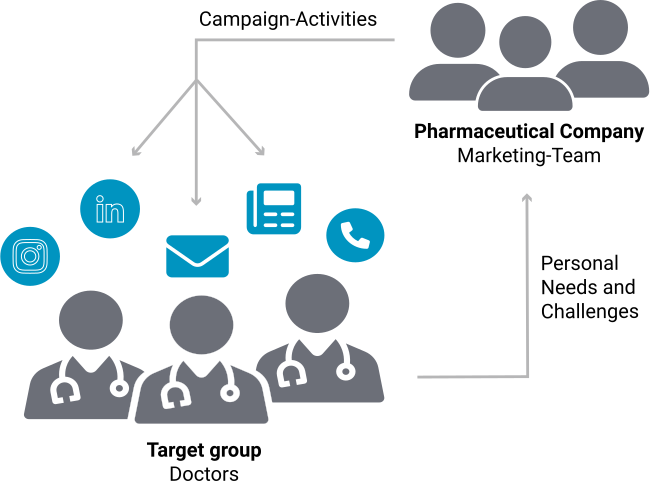
When approaching doctors and medical workers, it is crucial that pharmaceutical companies focus on the needs, challenges and concerns of the medical professionals. It is essential that companies in the pharmaceutical industry understand and address the current challenges and relevant topics of doctors in the best possible way. Developed campaign visuals, marketing activities and content will become more relevant for the target group and increases the trust of the brand and the chance of a product prescription.
Customer Journeys in Omni-Channel Pharma Marketing
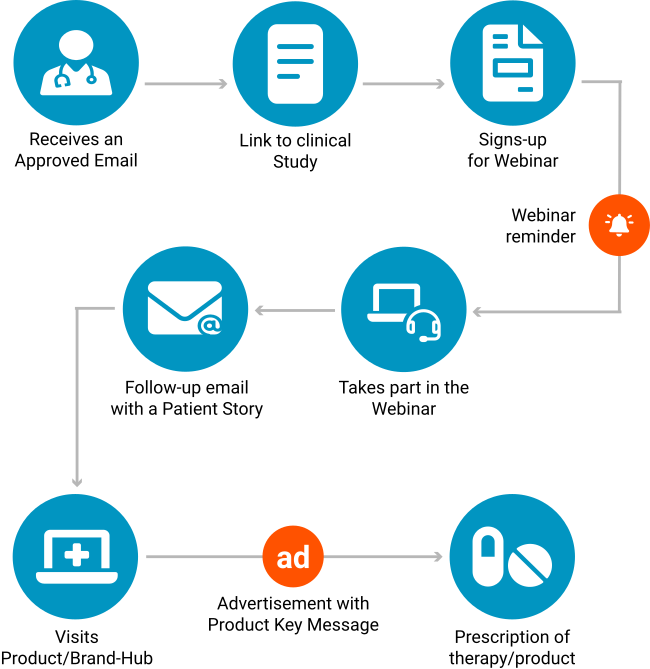
Customer journey mapping in pharma marketing.
The customer journey in pharma marketing describes the individual contact points and brand experiences that a doctor goes through until they make a conscious decision in favor of the advertised therapy option. To achieve this, doctors are provided with the right message about therapy options and relevant product information at every step of the customer journey, which is communicated in line with the individual's current level of knowledge, until the doctor makes a conscious therapy or product decision at the end of the customer journey.
The role of Customer Insights in Omni-Channel Pharma-Marketing
The crucial success factor: customer insights.
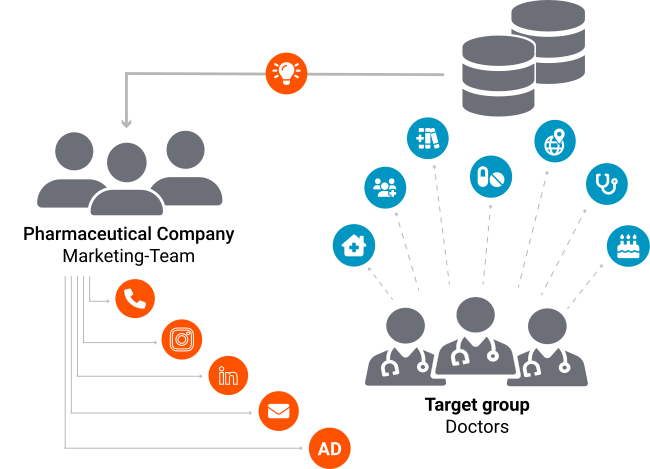
The availability, quality and operability of customer insights are a critical parameter that determines the success or failing of omni-channel campaigns. The more validated customer data is held on individual customers and used in a targeted manner as part of marketing tactics, the more effective they are. Customer Insights can be personal preferences as well as behavioural and activity data of individual persons, which are used for personalized advertising and marketing activities.
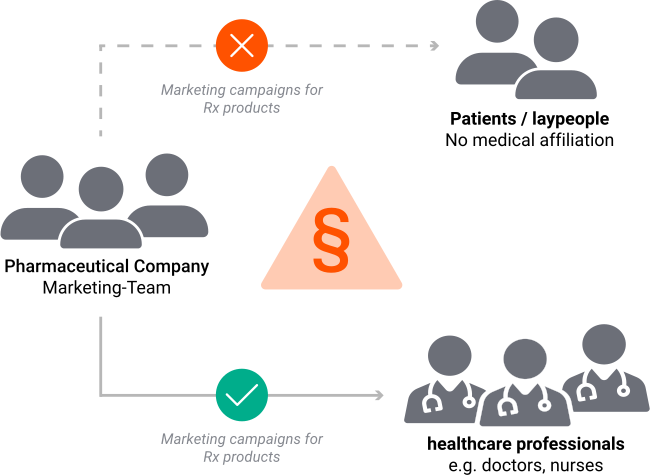
Advertising Campaigns for prescription drugs in Germany
Regulatory requirements in pharma marketing.
While non-regulated industries can exploit the full potential of advertising platforms on the market, pharmaceutical marketing teams are subject to strict legal requirements when advertising prescription drugs (also known as “Rx-Products”). In Germany, the Therapeutic Products Advertising Act (HWG) applies in this regard, which clearly prohibits the advertising of prescription drugs or therapy options to patients (persons who do not belong to medical professionals). This significantly impacts the availability of advertising channels in omni-channel pharma marketing.
Picking the right Channels for Omni-Channel Pharma Marketing Campaigns
The right advertising channels for approaching doctors.
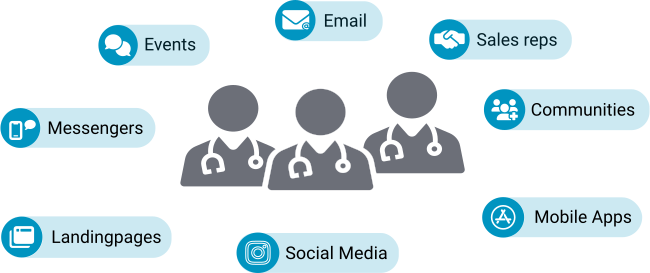
In omni-channel pharma marketing, healthcare professionals are not only approached by sales representatives in practices, clinics or at events, they also receive information on relevant new products and advertising messages via various digital channels on a daily basis. Channels that guarantee that only healthcare professionals have access to them are particularly suitable for the digital advertising of prescription medicines.
Successful Push-Marketing-Strategies in Pharma- and Healthcare-Marketing
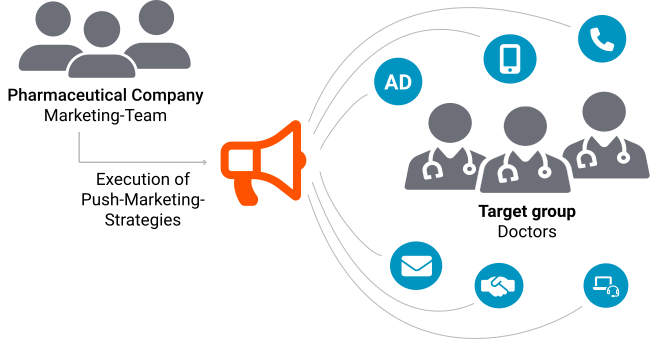
In pharmaceutical marketing, push marketing refers to the active advertisement of medicines or treatments to doctors, pharmacists and wholesalers. This involves actively approaching the target group, often e.g. through the sales force or marketing campaigns, which bring the relevant product information or key messages to the target group in order to influence their prescribing behavior. In push marketing in the healthcare industry, a product is actively “pushed” into the market (which also explains the origin of the term “push”).
Approaching doctors in pharmaceutical marketing by the sales force
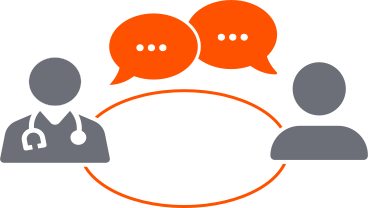
On-site visit by the sales rep at the doctor's practice (or clinic).
In pharma marketing, approaching doctors through the sales force is the traditional way of placing relevant product messages in a highly targeted manner. Sales reps are often supported by established and mobile CRM solutions (such as Veeva), which simplify and support the process of simple sharing of product presentations (e-Detailing, e.g., Veeva CLM), the collection of marketing consent (opt-ins) and the retrieval of relevant feedback through centrally orchestrated surveys. A trusting exchange at eye level between sales representatives and doctors strengthens credibility and supporting a long-term relationship. Challenges during visits lie in the increasingly difficult accessibility of doctors in their everyday practice life, which often leads to the sales representative's visit ending at the reception desk.
Targeting doctors through advertising campaigns in pharma marketing
Placement of advertisements in digital and print media.
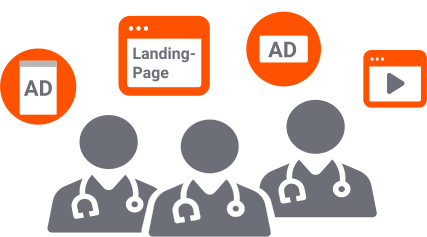
An effective pharmaceutical marketing strategy includes setting up and optimizing advertising campaigns to promote relevant product messages and content. Developing impactful key visuals, defining persuasive key messages, and selecting the appropriate advertising channels are crucial to success. While traditional advertisements in print media typically impact brand awareness within the target group, digital pharma marketing campaigns are better suited to supporting effective customer journeys. For product-related marketing materials, environments restricted to healthcare professionals (HCPs) are used. For non-product-related advertising, such as disease awareness campaigns, all available advertising channels—including search engine marketing, social advertising, and others—are relevant.
Email marketing in pharma and healthcare marketing
Personalized email strategies to reach doctors.
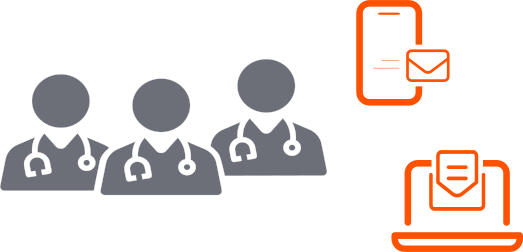
Email newsletters and approved emails are established marketing tactics to reach known doctors with relevant content. Effectively collecting marketing consent (email opt-ins) is an important prerequisite. In addition, content preferences and interests of the target group are collected in order to personalise the communication. The objective is to target healthcare professionals individually with relevant email content (e.g. webinar offers, product information, study results or treatment options). A common challenge is the availability of modular content and the number of consents available.
Direct communication with the doctor via messaging services
Using instant messaging effectively in pharma und healthcare marketing.
The integration of messenger services (e.g., WhatsApp) into omni-channel pharma marketing offers direct and realtime communication with doctors. Messenger services are often used informally by sales reps to enter into direct dialogue with HCPs (not officially introduced by the company). In contrast to approved emails, however, messages sent via messenger are more difficult to control. Their content usually escapes standardized medical approval processes. This poses a challenge in terms of compliance with internal guidelines (such as an existing marketing consent) and medical approvals. Nevertheless, the channel offers the opportunity to place information with the customer in real time and promotes personal dialogue and customer loyalty.
Effective Pull-Marketing-Strategies in Pharma- and Healthcare-Marketing
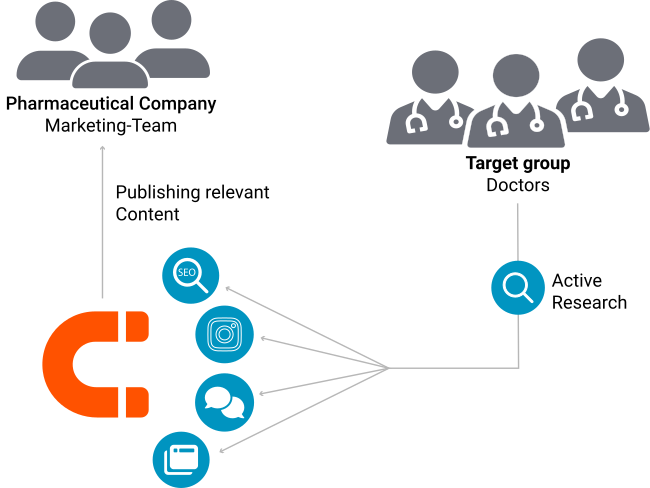
Pull marketing strategies in pharmaceutical marketing aim to meet the existing demand or interest of HCPs or end consumers by providing relevant content on various pull marketing channels. Instead of delivering the advertising message or key message of a campaign to the target group as in push marketing, in pull marketing in pharma, messages are placed where the target group is located and informed.
Related articles